
NITI Aayog Releases Study Reports on Scenarios Towards Viksit Bharat and Net Zero
10th February 2026
NITI Aayog has released eleven study reports on Scenarios towards Viksit Bharat and Net Zero on the 9th and 10th of February 2026. The eleven reports detail the findings of India`s first government-led, multi-sectoral, integrated study to assess development scenarios that deliver on the Hon`ble Prime Minister`s vision Viksit Bharat 2047 while simultaneously reducing net green-house gas (GHG) emissions to zero by 2070
NITI Aayog’s study entails a scenario-based analytic modelling exercise that integrates economic growth, India’s development priorities, and climate commitments. The study has been informed by ten inter-ministerial working groups that examined long-term transition scenarios across key domains like macroeconomic aspects of the transition; sectoral low carbon transition in power, transport, industry, buildings, and agriculture; financing for climate action; critical minerals; R&D and manufacturing; and the social implications of the transition.
NITI Aayog undertook this comprehensive assessment to inform long-term policy planning
The synthesis report summarises the key findings emerging from the development scenarios assessed by NITI Aayog. The scenarios consider historical trends, current policies, and additional policy measures to accelerate demand electrification, enhance circularity, improve energy efficiency, promote the rapid development of low-carbon technologies and fuels, and encourage behavioural shifts
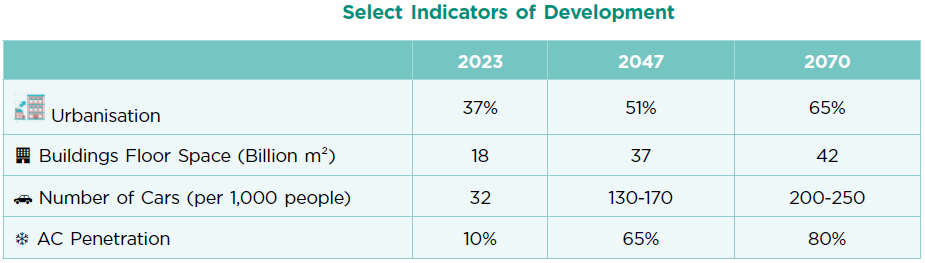
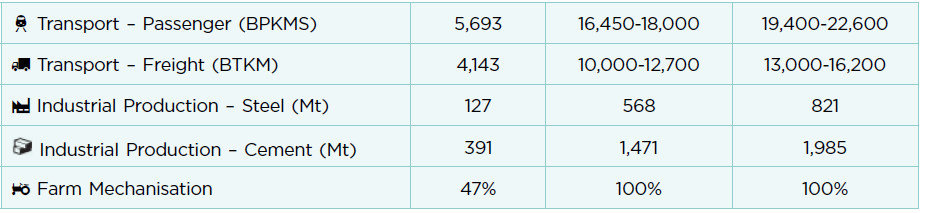
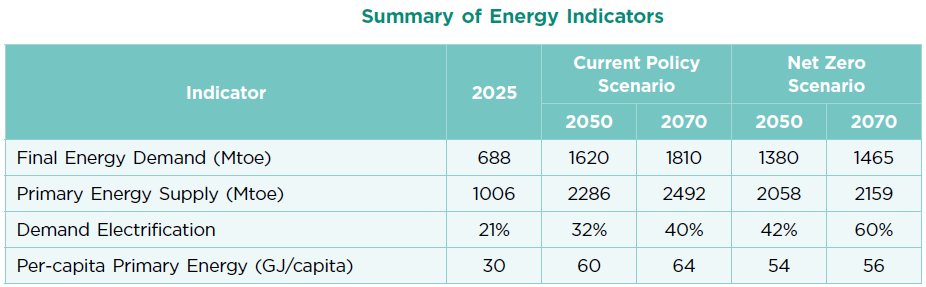
The report details the macroeconomic implications of assessed development scenarios on GDP growth, investment, trade, jobs, and public finance, highlighting both trade-offs and synergies in India’s development pathway. The macroeconomic risk that climate change poses to agriculture, infrastructure, and health, compounded by rising carbon-related trade barriers, are also discussed
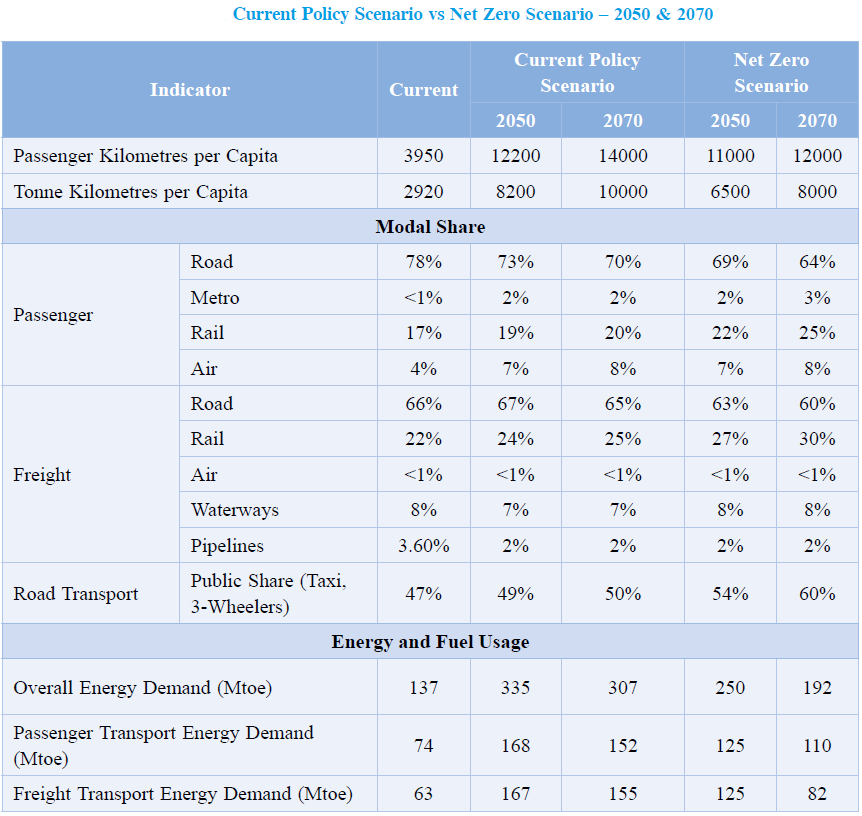
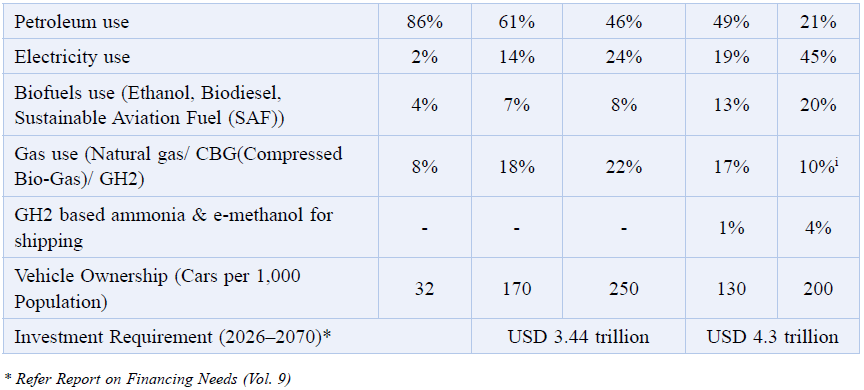
This report assesses the current state and long-term evolution of India’s mobility ecosystem, covering passenger and freight demand, modal composition, technological maturity, and energy use. With passenger and freight transport projected to rise, modal shift, zero-emission vehicles, clean fuels and technologies, and structural shifts toward public and shared mobility solutions and rail and waterway transport are identified as essential components of the transition
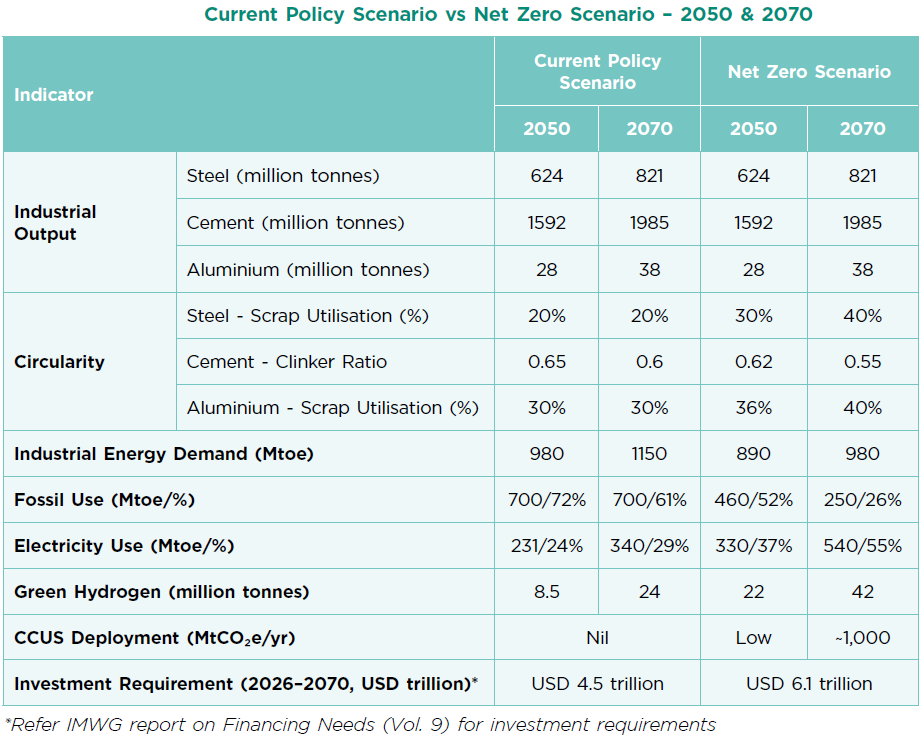
This report examines the various facets of industrial energy transition including industrial output, energy demand, and emissions across major subsectors including steel, cement, aluminium, textiles, and petrochemicals. Increasing electrification, material efficiency and recycling, share of non-fossil energy, and leveraging emerging technologies emerge as the way forward
This report highlights that roughly 86% of the building floor space that will exist in 2070 is yet to be built. By focusing on passive design, super-efficient appliances, and low-carbon materials, India can avoid locking in high energy demand and heat stress. This is critical as air-conditioner ownership is projected to jump from 10% today to 80% by 2070
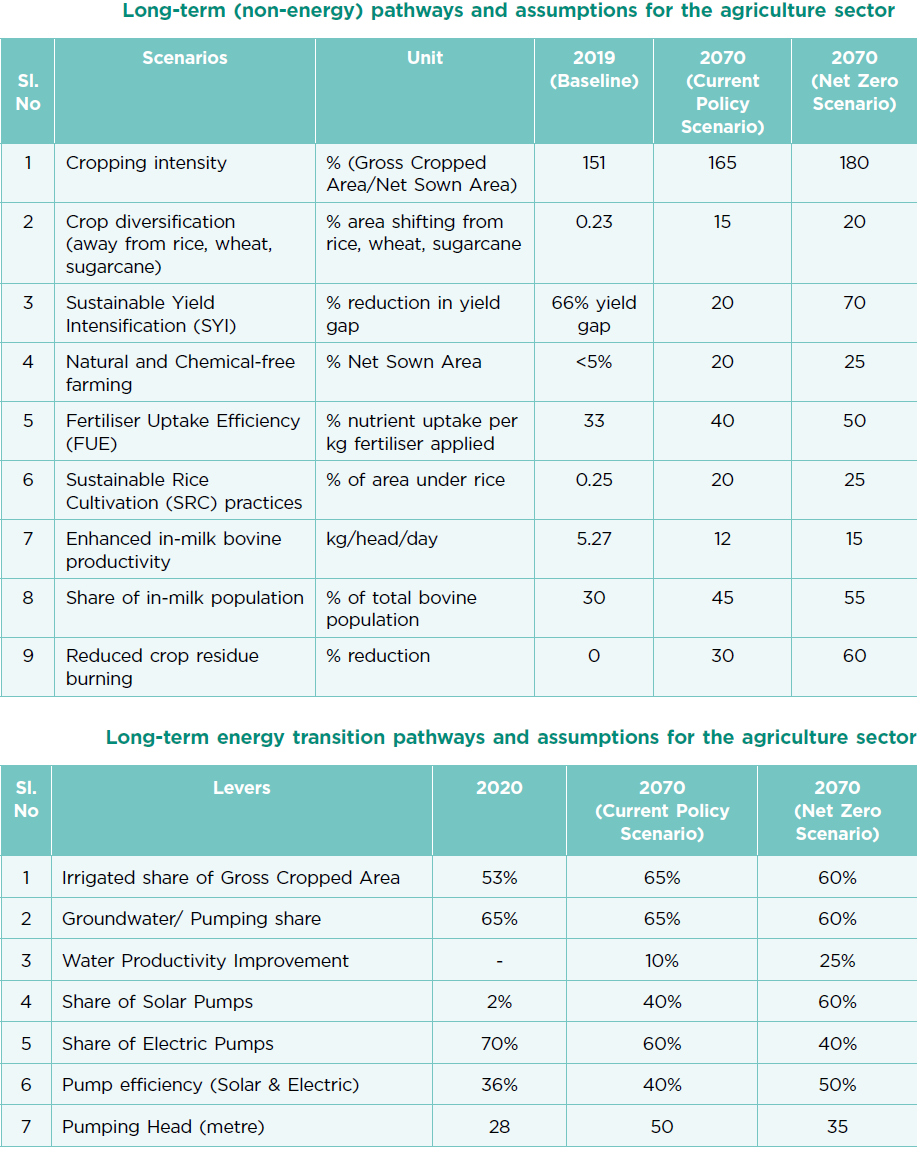
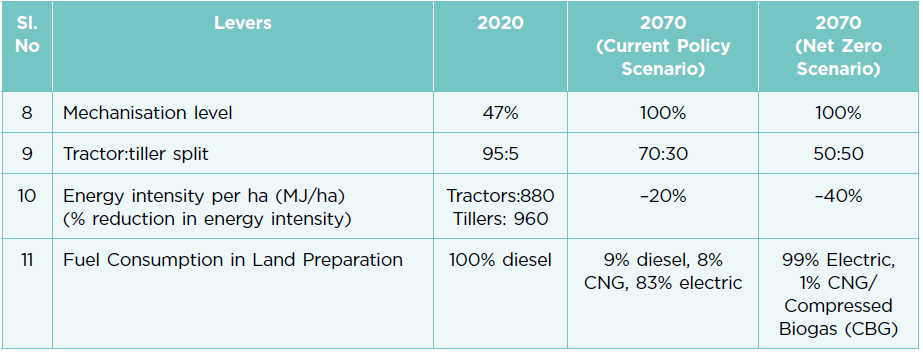
The transition strategy in this report emphasises ‘strategic sequencing’, where the primary focus is on resource efficiency such as micro-irrigation and fertiliser optimisation to directly boost farmer incomes and soil health before transitioning to large-scale energy substitution
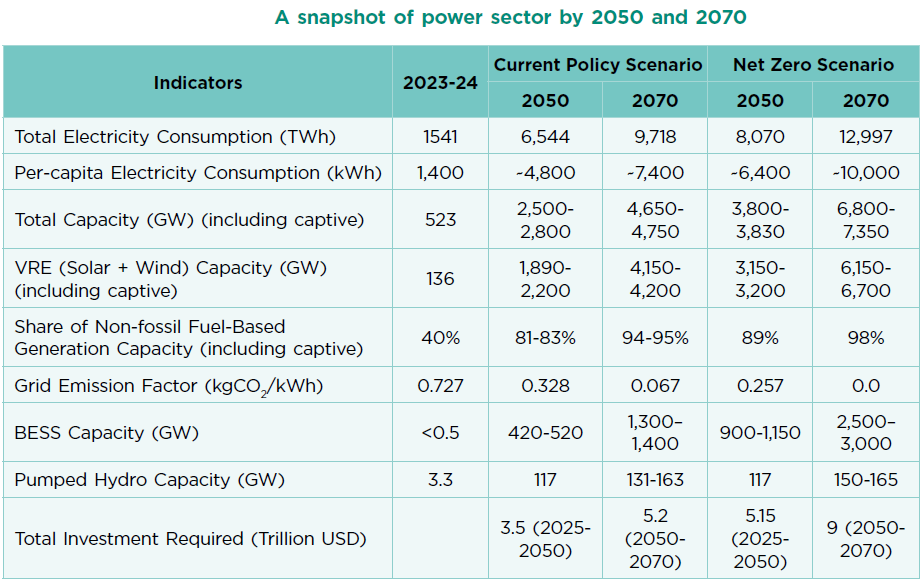
This report examines the central role of electricity in India’s development and Net Zero agenda, assessing future electricity demand, low-carbon supply options, system reliability, and investment requirements. Demand is projected to rise sharply due to increasing urbanisation, cooling needs, digitalisation, electric mobility, and green hydrogen production. The report evaluates pathways for rapid electrification, large-scale renewable deployment, and storage and transmission expansion for a reliable, affordable, and progressively clean power system
This report focuses on bridging structural gaps in the waste sector, through universal collection, 100% door-to-door segregation, and the large-scale adoption of bio-methanation. The report also highlights how by adopting waste-to-energy solutions, waste can be transformed into a resource such as Bio-CNG, compost, and treated wastewater, that contributes to soil health and circular urban economies
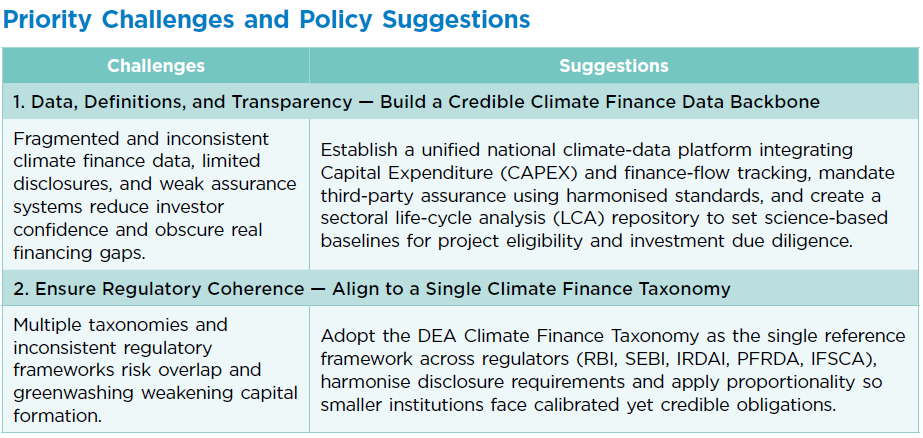
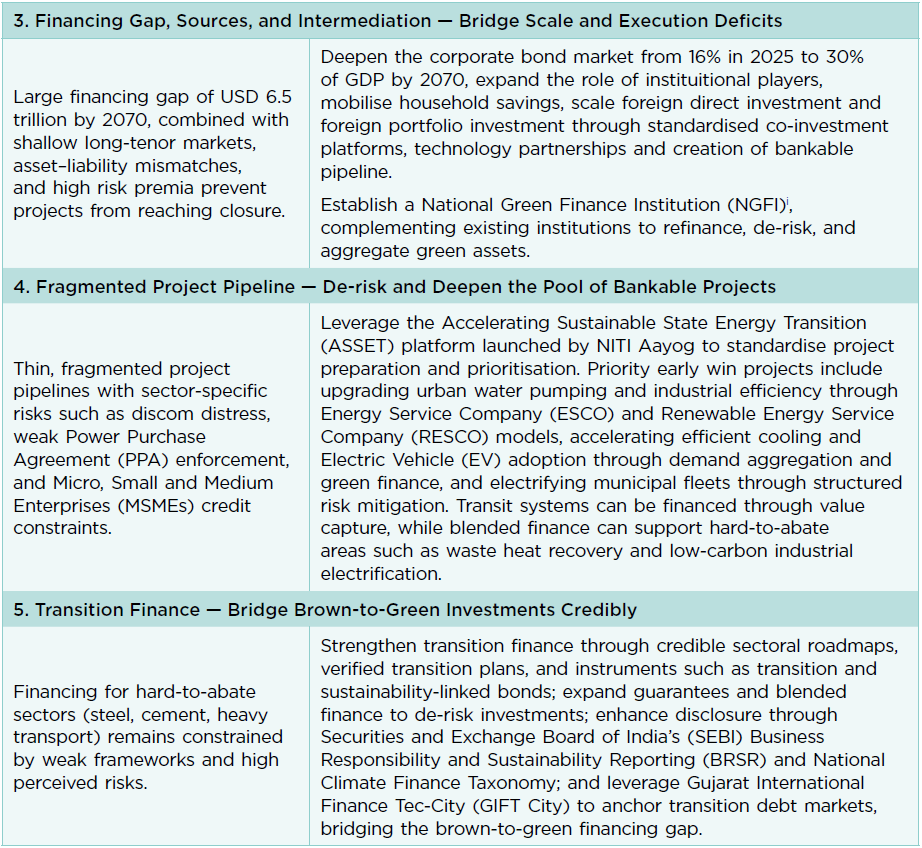
The report examines India’s investment requirements in the key sectors of power, transport, and industry. The study concludes that an unprecedented capital mobilisation of $22.7 trillion by 2070 is required under the Net Zero scenario, including a projected financing gap of $6.5 trillion, and identifies the need for domestic financial reforms and stronger global capital integration
This report estimates mineral requirements arising from India’s deployment of clean technologies across key segments such as solar, wind, battery energy storage systems, EVs, and electrolysers. Avenues to de-risk the critical mineral supply chain and meet India’s future requirements through coordinated action across development of domestic resources, international sourcing, institutional reforms, and circularity are discussed
This report emphasises that the net-zero journey is a human-centric development project, not just a technical one. It highlights that the transition will reshape critical areas such as land use, employment, and migration patterns. The report also underscores the health benefits of the transition, such as reduced air pollution, and the necessity of building climate-ready health systems