GWEC India Wind Report 2025
26th August 2025
The Global Wind Energy Council (GWEC) has unveiled its latest report “Wind at the Core: Driving India’s Green Ambitions and International Influence”
(Attribution: India wind energy market outlook 2024-2030. Global Wind Energy Council and MEC+, 2025)
The report details how India’s installed wind capacity can more than double from 51 GW to 107 GW by 2030, in line with state-level Resource Adequacy Plans (RAP). This is pivotal to help India achieve least cost pathway for a successful energy transition
Furthermore, reports from organizations like NREL, IEA, WRI, and Lawrence Berkeley recommend even higher wind capacity (121-164 GW) by 2030. Addressing grid concerns, strengthening RPO compliance, and aligning bidding processes with state offtake needs could push installations toward the full potential
The GWEC / MEC+ report offers excellent insights into India`s wind sector. We capture the executive summary of this 64-pages report
Global Energy Landscape: The global energy landscape is undergoing a profound transformation with renewable sources, particularly wind energy, at the forefront. This transition is driven by significant cost reductions, ambitious sustainability targets, supportive policies, and escalating demand. By 2030, renewables are expected to supply approximately 50% of global electricity, with wind capacity projected to exceed 2 TW, accounting for 20%-25% of the renewable energy mix
India's 100 GW by 2030 Target: India’s energy transition is in alignment with these global trends, targeting 500 GW of non-fossil sources by 2030, including a crucial 100 GW from wind energy. This is pivotal for setting the nation on a path to achieve its Net Zero goal by 2070
Wind's complementary role: Multiple studies indicate a much higher requirement for wind installations by 2030, driven by wind’s complementary role to solar in producing Round the Clock (RTC) power, lowering costs and improving grid utilisation significantly
Moreover, increasing wind in the energy mix can enhance the Capacity Utilisation Factor of RE assets, lead to more than 2.5x savings for customers compared to grid tariffs, and provide higher per unit profit to developers as wind’s capture price is better aligned with peak demand hours. It also reduces transmission CAPEX by nearly 50% compared to solar plus storage hybrid projects due to less requirement for transmission
Strong policy support: Strong policy support, including Wind Renewable Purchase Obligations (RPO) and a mandated annual 10 GW wind project bidding, C&I decarbonization targets has driven consistent growth in domestic onshore wind capacity from about 40 GW in 2021 to approximately 52 GW in 2025 (as of 30th June 2025), and has boosted wind turbine generator (WTG) manufacturing capacity from 12 GW to 20 GW between 2022 and 2024
Areas for improvement: Despite focused initiatives, managing project timelines and preventing cancellations remain areas for improvement. Key challenges include timely signing of Power Supply Agreements (PSAs), improved compliance with RPO by states, and effective management of grid construction schedules and commissioning processes. Addressing local execution obstacles is essential to streamline project development
Currently, India has achieved an installed capacity of 52 GW (as of 30th June), with projections indicating a potential increase to ~84 GW till 2030 if existing issues persist. However, addressing grid infrastructure concerns and improving RPO compliance could push installations to ~95 GW by 2030
Clear policies and planning around RPO and grid development are crucial to achieving the ambitious 100 GW target. Elevating the localisation of wind turbine manufacturing to around 85% would align strongly with the Prime Minister’s vision of achieving Viksit and Atmanirbhar Bharat
India has ~20GW of manufacturing capacity. The country is competing on quality and costs in export but is not competing in local market. The major issues being scale, raw material and under investment in technology. Scaling annual wind installations to 8 GW could reduce costs by approximately 10%, create over 116,000 jobs, and boost local manufacturing content to at least 80%
Conclusion: In conclusion, while the journey towards a sustainable energy future is complex, the potential rewards are immense. Wind energy offers a costeffective, reliable, and environmentally friendly solution that can drive economic growth, create jobs, and enhance energy security. With the right mix of policies, planning, and execution, India can harness the power of wind to propel the nation towards a sustainable and prosperous future
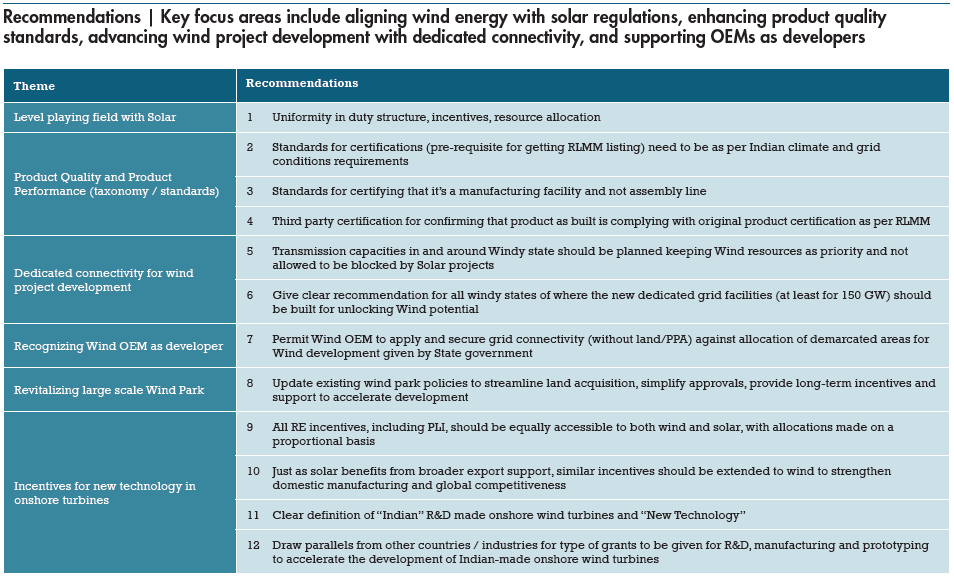
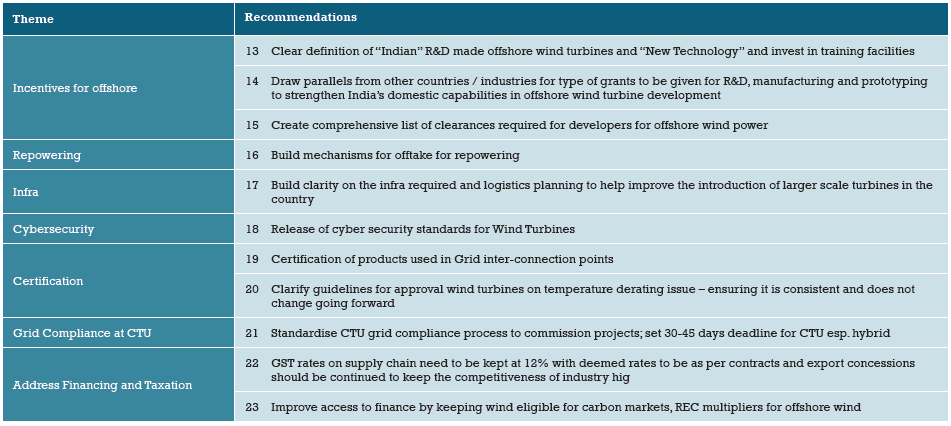
Recommendations: